
By Ibel Perez, owner of Super Diver 911
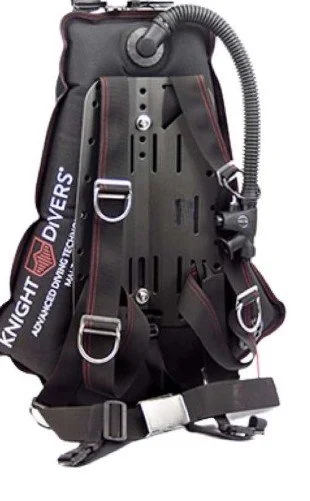
If you’ve been looking at the NEX Leatherback BCD line and wondering why there are so many models — and why the prices run from $199 to almost $1,500 — this guide is for you. The Leatherback isn’t one BCD. It’s a modular backplate-and-wing system: a backplate, a harness, and a wing (the inflatable bladder) that bolt together into one rig. You can buy the pieces one at a time, or buy them as a complete system.
Below, we explain every model, what it costs and why, the honest pros and cons, and how to choose the setup that matches the diving you actually do.
First: Backplate & Wing vs. a Jacket BCD
Most divers learn in a jacket-style BCD — the vest you wear, with the air cell built in. A backplate-and-wing puts all the lift behind you, on a flat plate. Here’s the honest comparison:
Backplate & wing — pros
Fit is exact. The harness adjusts to your body, not to a size chart. No more “between a medium and a large.”
Better trim. Lift sits behind you, so you level out horizontally instead of dangling feet-down.
It never really wears out. A torn wing, a frayed harness, a bent D-ring — you replace that one part, not the whole BCD.
It grows with you. Same plate works for a single tank in Florida today and a technical configuration later.
Packs flat for travel, especially with a lightweight aluminum plate like the Leatherback (1.2 lbs).
Backplate & wing — cons
There’s a learning curve. Your first setup takes some adjusting and a dive or two to dial in.
Fewer built-in pockets. Storage is added with pockets and pouches instead of coming standard.
You have to make choices — harness style, wing size, options. (That’s exactly what this guide is for.)
Weight is separate. The plate is light, so your ditchable weight rides in weight pockets rather than being built into the BCD.
Jacket BCD — pros: familiar from your Open Water course, walk-in-and-dive simple, integrated weights and pockets, usually cheaper to buy complete.
Jacket BCD — cons: fit is approximate, they wear out as one unit, trim tends to be more vertical, and when you outgrow it you replace everything.
Our honest take: if you dive a few times a year on vacation and simplicity wins, a jacket is fine. If you dive regularly — or plan to — a backplate and wing is the last BCD platform you’ll need to buy.
The Three Building Blocks
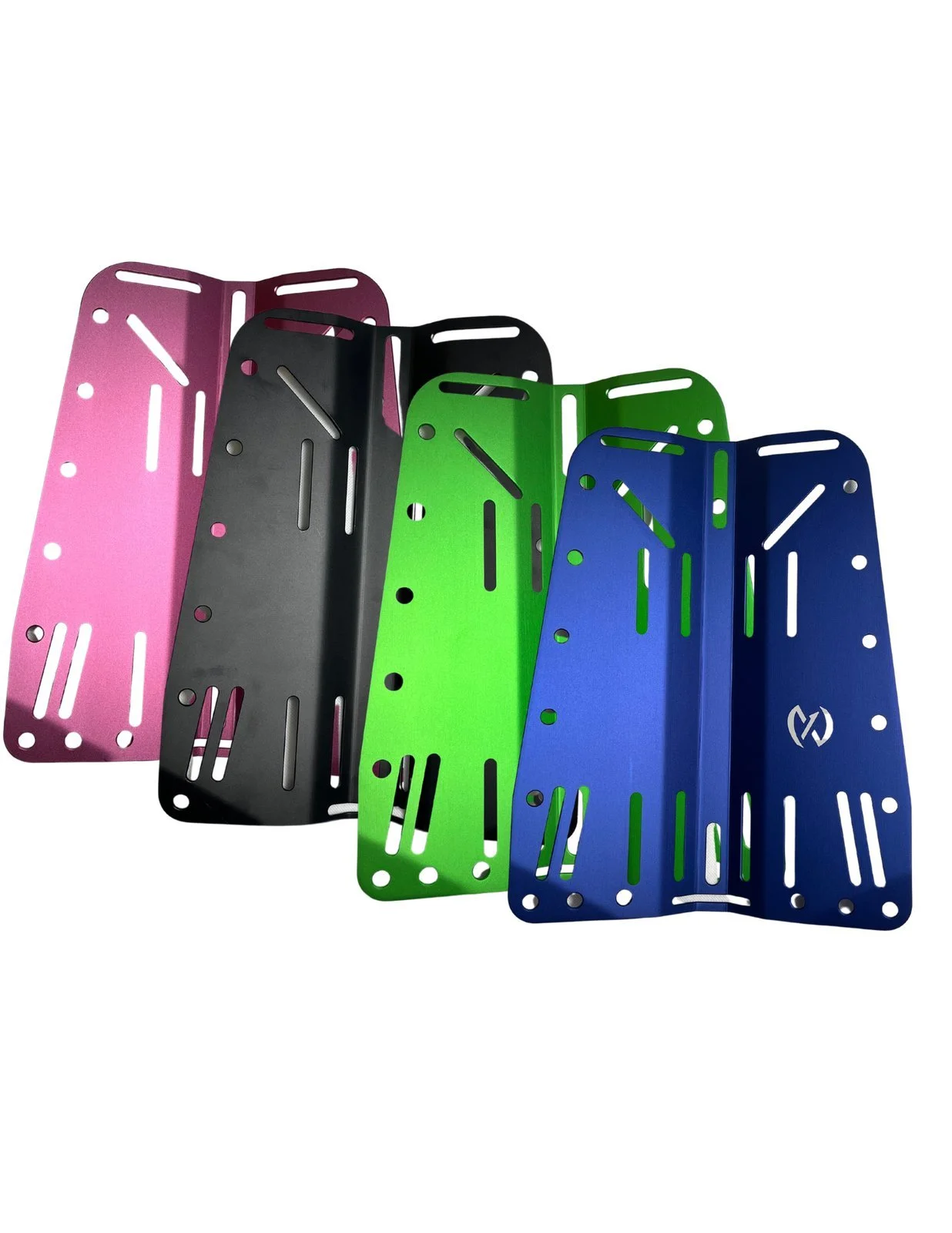
The backplate — the foundation. The Leatherback plate is precision-cut, aircraft-grade aluminum, in two sizes (Small and Large) and four colors (Black, Blue, Pink, Green). Aluminum keeps it light for travel and warm-water diving. $199.
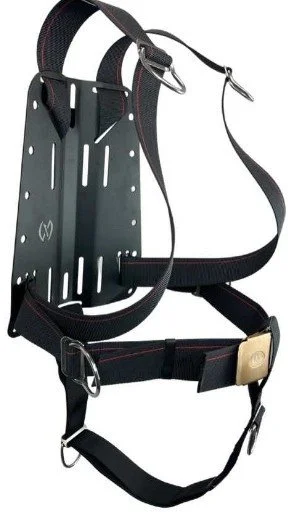
The harness — the webbing that holds it all to you. Two styles (explained below). $110–$180.
The wing — the inflatable air cell that provides lift, sized in pounds of lift. $440–$575.
Add a Single Tank Adapter (STA, $69) to mount a single tank cleanly, and weight pockets ($130) that slide onto the harness webbing with a quick-release — and you’ve built a complete rig piece by piece.
How to Choose Your Wing Size (This Is the Part Most People Get Wrong)
The wing’s job is to float you plus your whole rig at the surface, and to compensate for your wetsuit compressing at depth. Pick by your heaviest typical setup — thickest suit, heaviest tank — not your lightest.
Wing-size guide — by diving, exposure and tank, and wing lift to pick:
Florida & Caribbean reefs, warm water — Rash guard to 3mm, aluminum 80 — Wing lift: 25 lbs (27 lbs for a little margin)
Warm water with a fuller kit, or 5mm suits — 3–5mm, aluminum or steel — Wing lift: 27–34 lbs
Temperate water — California, springs in a thick suit — 7mm wetsuit, steel tank — Wing lift: 34 lbs
Cold water & drysuits — Northeast, Great Lakes, Pacific NW — Drysuit or 7mm + heavy steel — Wing lift: 38–44 lbs
Technical ambitions — doubles on a single-tank wing is not the plan — Talk to us first — Wing lift: 44 lbs class
Too small is a safety problem: the wing can’t float your rig at the surface with a full tank and full weights.
Too big is a comfort problem: an oversized wing wraps around the tank (“taco”), traps air, vents poorly, and adds drag — your trim suffers on every dive.
Rule of thumb: match the wing to the thickest suit and heaviest tank you realistically dive, and no bigger. Most Florida recreational divers are perfectly served by the 25 or 27. If you split your diving between Florida summers and cold-water trips, the 34 is the honest middle.
The Sizes, One by One
25 lbs — The warm-water wing. Florida reefs, the Caribbean, a 3mm suit or less, and an aluminum tank. Lightest, most streamlined, and the easiest to pack — the travel diver’s pick.
27 lbs — Warm water with margin. Same diving as the 25, but with headroom for a 5mm suit, a steel tank, or a few extra pounds of lead. (Available on the standalone wing and the Ultimate System.)
34 lbs — The crossover. Temperate water in a 7mm wetsuit (think California), steel single tanks, or Florida springs in winter in a thick suit. If you dive in more than one kind of water, this is the honest middle.
38 lbs — Cold-water single-tank diving: drysuits, heavy steel cylinders, and the extra lead that comes with them. (Ultimate System only.)
44 lbs — Maximum single-tank lift. Drysuit diving with heavy steel, or technical-leaning setups. More wing than warm-water divers will ever need — and that’s the point: buy it only if your diving asks for it.
Cordura vs. Knight Shield: The Two Wing Materials, Compared
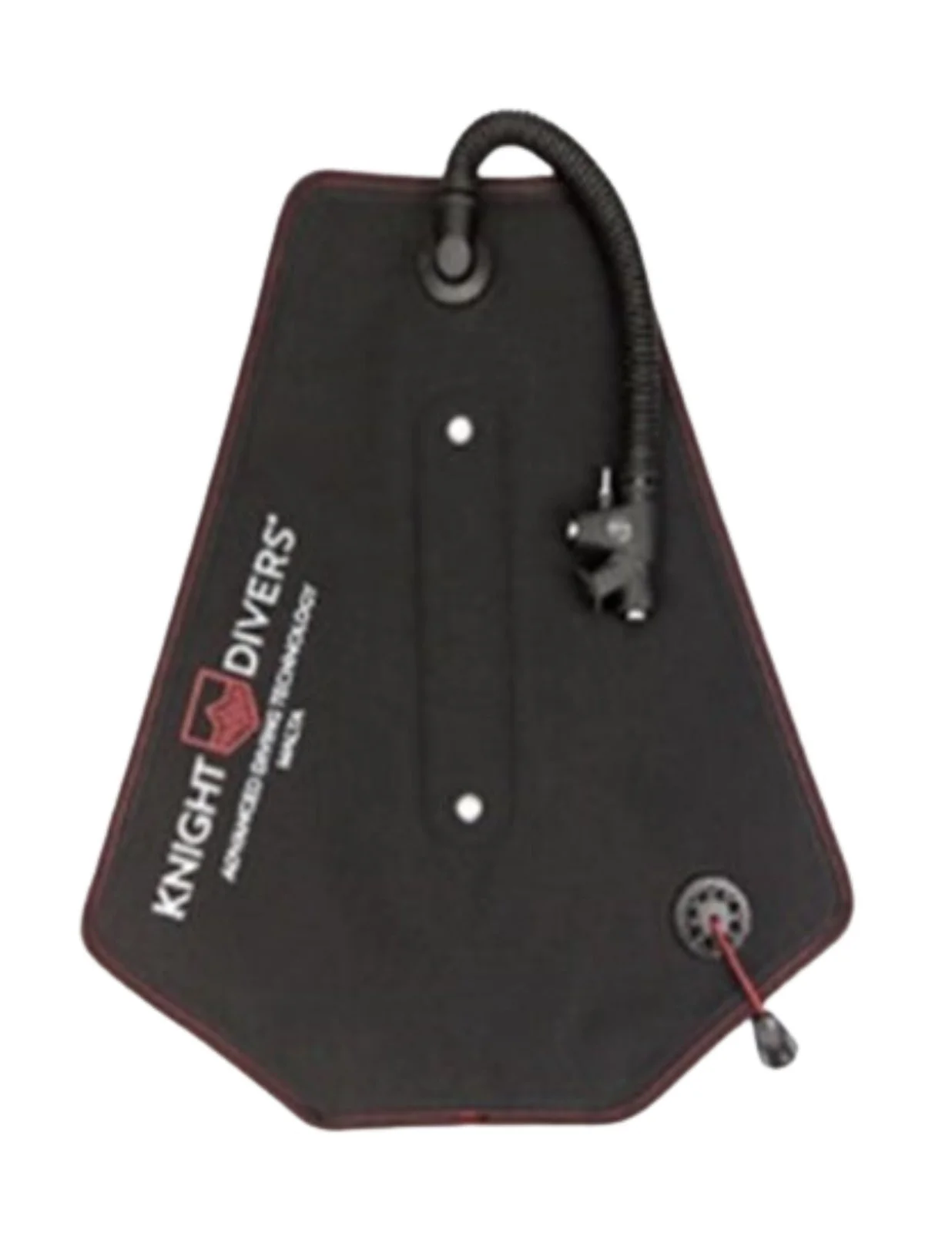
Every Leatherback wing comes in two shells. Same shape, same lift, same bladder — the difference is what protects it.
Cordura — $440 (standalone wing)
The industry-standard ballistic nylon shell, and the right choice for most divers.
Pros: proven durability for recreational diving; keeps the price down; decades of track record as the wing material.
Cons: over years of wreck penetration, boat ladders, and rough handling, it will show wear sooner than Knight Shield.
Pick Cordura if: you dive reefs and open water, dive recreationally, and want the sensible spend.
Knight Shield — $575 (standalone wing), +$135 on the Deluxe and Ultimate systems
NEX’s premium heavy-duty shell material.
Pros: maximum abrasion and puncture resistance — built for contact with wrecks, rock, and gear abuse; the longest-lived shell we sell; premium finish.
Cons: it costs $135 more, and for gentle reef diving that extra armor is protection you’ll never test.
Pick Knight Shield if: you dive wrecks, instruct (your gear works every day), dive a high number of dives per year, or simply buy once and keep gear for a decade.
The price difference, plainly: Knight Shield is a flat $135 upgrade everywhere it appears — $440 to $575 on the wing alone, $770 to $905 or $830 to $965 on the Deluxe, and +$135 on any Ultimate build. Neither material changes your lift or your trim; you’re paying purely for how much abuse the shell can take, and for how long.
Shopping for the gear in this guide?
See the exact gear this post talks about in our shop — family-owned, free U.S. shipping, and we match and beat any authorized dealer's discount.
👉 Shop the gear at superdiver911.com
Every Leatherback Model, Explained
NEX Leatherback Aluminum Backplate — $199
The foundation plate by itself, for divers who already own a harness and wing or want to build slowly.
Pros: lowest-cost entry into the system; light (1.2 lbs); two sizes, four colors.
Cons: it’s one piece of a system — you still need a harness and a wing to dive it.
Best for: upgraders and patient builders.
NEX Leatherback BCD Harness — DIR $110 / Original $180
DIR harness ($110): one continuous piece of webbing, minimalist, almost nothing to break. The choice for divers who like simple, standardized rigs. Con: adjusting it is a set-it-once process, and there’s no quick-release buckle.
Original harness ($180): adjustable with quick-release convenience — easier on/off, easier to fine-tune between dives and between wetsuit thicknesses. Con: more hardware, slightly more complex.
Best for: replacing a worn harness or completing a build.
NEX Leatherback Wing — $440 (Cordura) / $575 (Knight Shield)
The air cell by itself, in 25, 27, 34, or 44 lbs of lift, with NEX’s “Golden Ratio” shape for trim and comfort.
Pros: buy exactly the lift you need; replace or add a second wing size without touching the rest of your rig.
Cons: you need the plate and harness to use it.
Best for: divers building their own combination, or adding a cold-water wing to a warm-water rig.
NEX Leatherback Deluxe BCD System — $770 to $965 (+$100 factory assembly)
The core trio — backplate + harness + wing — as one matched system:
DIR harness + Cordura wing: $770
Original harness + Cordura wing: $830
DIR harness + Knight Shield wing: $905
Original harness + Knight Shield wing: $965
Wing sizes 25, 34, or 44 lbs. Do the math against the parts list and you’ll find the Deluxe prices out to almost exactly the sum of its parts — you’re not paying a bundle markup; you’re getting a matched, configured system. What it doesn’t include: the STA and weight pockets (add them when you want them).
Pros: the smart-value way into a complete Leatherback; full warranty and support as a system.
Cons: fewer wing sizes than the Ultimate (no 27 or 38), and the tank adapter and weight pockets are separate purchases.
Best for: most recreational divers — this is the sweet spot.
NEX Aluminum Backplate BCD Ultimate System — $1,170 to $1,465
The complete, ready-to-dive flagship. Everything in the Deluxe, plus:
Single Tank Adapter included (color-matched)
Two weight pockets included ($130 on their own)
Heavy-duty D-rings, cam bands, easy-adjust chest straps, belt buckle, and shoulder pads for comfort
Five wing sizes: 25, 27, 34, 38, or 44 lbs
Color customization across the plate, STA, D-rings, and buckle
Pricing: DIR harness builds start at $1,170 (Original harness +$60), Knight Shield wing +$135, factory assembly +$100 — topping out at $1,465 fully loaded. The Ultimate’s premium over the Deluxe roughly equals the STA and weight pockets alone ($199 in parts) before you count the pads, straps, bands, extra wing sizes, and color matching.
Pros: nothing left to buy but weights; the most comfortable and most customizable build; every size option.
Cons: it’s the most expensive way in — if you’ll never use the extras, the Deluxe is the better spend.
Best for: divers who want the finished rig, done once, done right.
Diving Sidemount? The Hammerhead Line
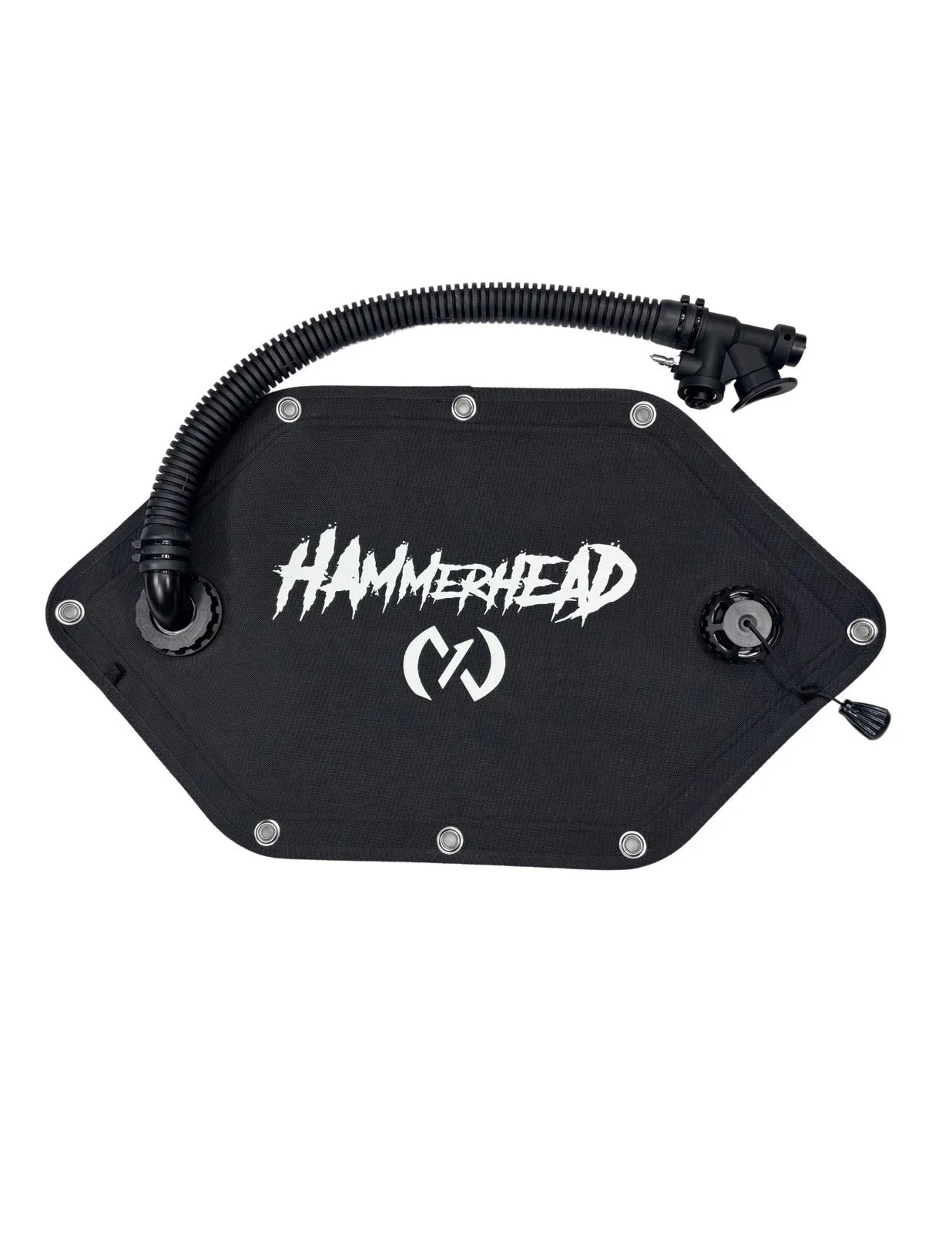
Sidemount is a different animal, and NEX’s answer is the Hammerhead: a sidemount bladder in 16 lbs (streamlined) or 36 lbs (trim) — $270 to $450 — built on the Hammerhead Spine Kit ($105), the backbone that lets you tailor harness and weight placement. Add the Side Mount Back Pouch ($89.95) for your lift bag and the Trim Pocket ($59.99), and you have a cave, wreck, and tight-space rig. If sidemount is your path, talk to us before ordering — configuration matters more than any single part.
So Which One Should You Buy?
New diver, first BCD, Florida diving: Deluxe System, 25 lb Cordura wing, harness of your choice. Add weight pockets when you’re ready.
Travel diver: Deluxe or a piece-by-piece build around the aluminum plate — the whole rig is light and packs flat.
You dive warm and cold water: Ultimate with a 34 lb wing, or a Deluxe 25 plus a second 44 lb wing for drysuit trips.
Instructor, wreck diver, hard on gear: Knight Shield wing, whichever system you choose.
You want it perfect and finished: Ultimate, assembled, in your colors.
Sidemount: Hammerhead — and let’s talk first.
Not ready to buy yet? Join free for gear tips and the monthly special: superdiver911.com/membership
Every Leatherback BCD and system is covered by a 2-year manufacturer warranty, ships free anywhere in the U.S. (except P.O. boxes and military APO/FPO/DPO addresses), and every build is confirmed personally before it ships. Still torn between two? Call or text (754) 444-2431 — you’ll get a straight answer from a diver, not a call center.
Browse the full Leatherback range at www.superdiver911.com and build the rig you’ll dive for the next decade.
Ibel Perez
Premium Dive Gear at superdiver911.com
United States
Support the little guy — shop with a family-owned dive shop.
Super Diver 911 is a small, family-owned dive shop. When you buy from us instead of a big-box store, you keep real dive shops alive — the shops that train divers, service gear, and keep this sport personal. Visit our website, browse the gear, and reach out any time: we match and beat any authorized dealer's discount, and shipping is free anywhere in the U.S.
Let’s help the little guy — support the family-owned dive shops. They’re the heart of this sport.
